Your rig can be freshly inspected and your logbook spotless, but if your medical card has lapsed, dispatch won't hand you a load. For drivers living around Westbury, Fondren and Braeswood, the hard part usually isn't passing the DOT physical. It's squeezing it in between a run to the Port of Houston on Monday and a haul up I-45 later in the week. This post is about making that visit efficient: knowing what to bring, what gets checked, and how to show up with your health already in order.
Why the medical card matters as much as your CDL
The Department of Transportation physical confirms you can safely operate a commercial motor vehicle. The standards come from the Federal Motor Carrier Safety Administration, and the full rules are published on the FMCSA medical page. After the evaluation, the examiner completes the official report, and if you meet the standards you receive a medical examiner's certificate. From there, you follow your carrier's or the state's process to keep that certificate on file with your CDL.
Treat it like a scheduled service on your truck. Skipping it won't hurt your body, but it can park you just the same.
Pack this the night before
Most delays at a DOT visit come from missing paperwork, not from the exam itself. Toss these into your bag:
- Your CDL plus a photo ID.
- Glasses or contacts you wear behind the wheel, since the eye test is done with them on.
- Hearing aids, if you use them.
- A current medication list with doses. Snapping pictures of the bottles works fine.
- Records from your own doctor if you're being treated for diabetes, high blood pressure, a heart problem, sleep apnea or anything similar. CPAP users should download the compliance data their machine stores.
- Any home readings you keep for glucose or blood pressure.
When the medical team has the whole picture up front, there's less chance you'll be asked to come back with something you left on the kitchen counter.
What happens in the exam room
It starts with a health history questionnaire. Take your time and be accurate. Leaving off a past surgery or a daily pill can cause headaches with your certification down the road.
Then the hands-on part:
- Blood pressure and heart rate. This is where plenty of drivers get caught off guard, especially those who rarely check at home. If you take medication for it, take your usual dose that morning.
- Vision. Each eye is checked for sharpness, plus your side vision.
- Hearing. You'll need to pick up a whispered voice from a set distance.
- Urinalysis. For DOT purposes it looks for things like sugar or protein. It is not a drug screen.
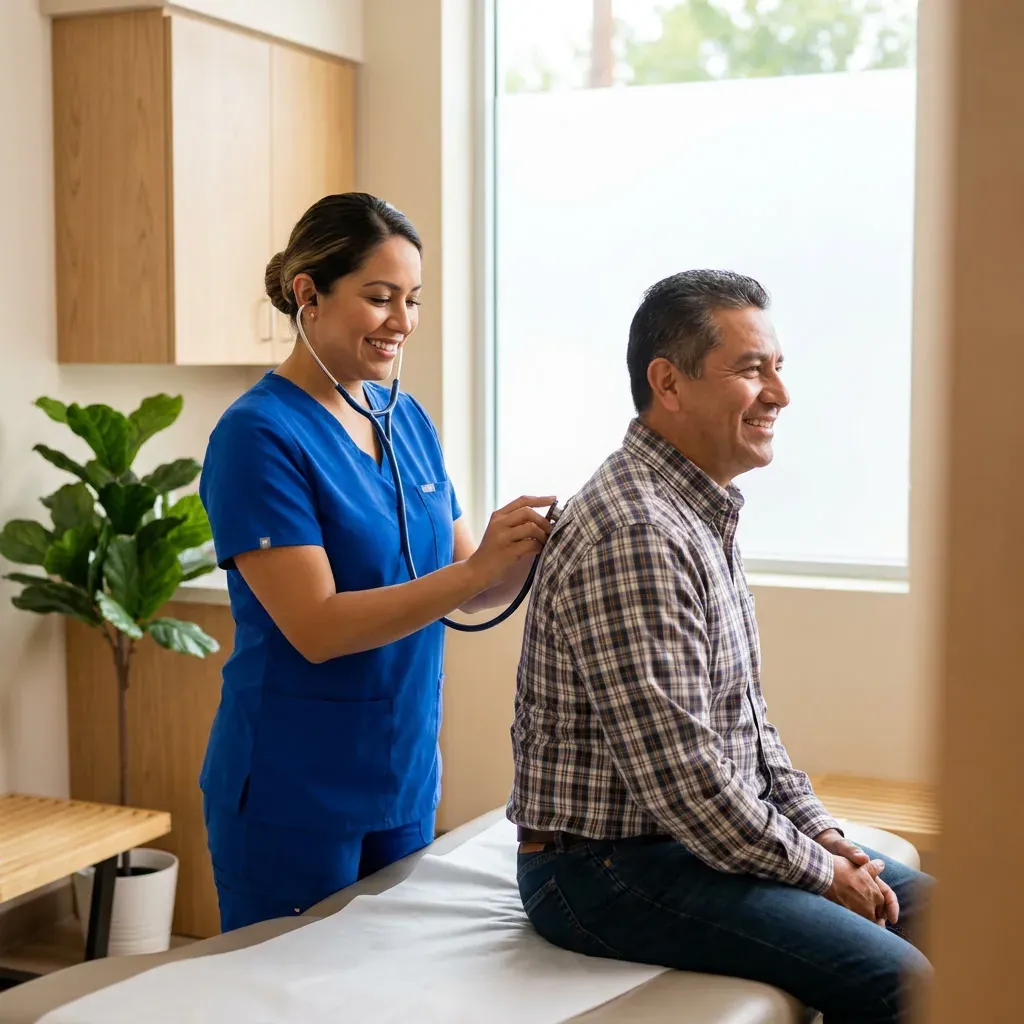
- Physical check: lungs, heart, belly, spine, reflexes and how well your arms and legs move.
If your carrier also needs a drug or alcohol screen, that's a separate test. You can take care of it at the same location through our alcohol and drug testing service. Ask dispatch which kind they require before you come in.
Driving with diabetes, high blood pressure or another condition
A chronic condition doesn't automatically end a trucking career. What matters is that it's under control and that you can show it. The worst strategy is waiting for the DOT exam to find out where your numbers stand.
The clinic can help you keep tabs on things through chronic condition care. If the medical team wants a closer look at your heart, an EKG can be done on-site, and blood work shows how your sugar, cholesterol and kidneys are holding up.
Sometimes the outcome is a certificate with a shorter validity so your condition can be rechecked, or a request for paperwork from your specialist. That's not a penalty. It's the system giving you room to keep driving while you prove your health is managed.
Staying road-ready between physicals
Long stretches in the seat, truck-stop meals and broken sleep all chip away at blood pressure, weight and blood sugar. A few habits make a real difference:
- Keep a jug of water in the cab and treat soda as an occasional thing.
- Use fuel stops to walk a lap or two around the trailer.
- If people tell you that you snore hard, or you wake up worn out, bring it up at your next visit.
- Don't quit your blood pressure pills just because you feel fine.
Drivers who take care of themselves on the road tend to have far less stressful physicals.
Fitting it into your route
The clinic sits at 5411 S Braeswood Blvd, right by Meyerland, with easy access to the 610 Loop and US-59. Doors are open every day, Monday through Sunday, 9:00 AM to 9:00 PM, and patients are seen in order of arrival, so you can stop by after dropping a load or before picking up the next one. Leave the tractor at the yard; parking for your car is free. The staff speaks Spanish and English, and if you don't carry insurance you can pay with cash or card.
See what's included on the DOT exam page, and if you'd like to add a general checkup, look at the current deals on our promotions page.
Need medical attention?
We're here to help. Call now to schedule your appointment or visit our clinic without an appointment.
Call now: +1 (832) 323-2330